

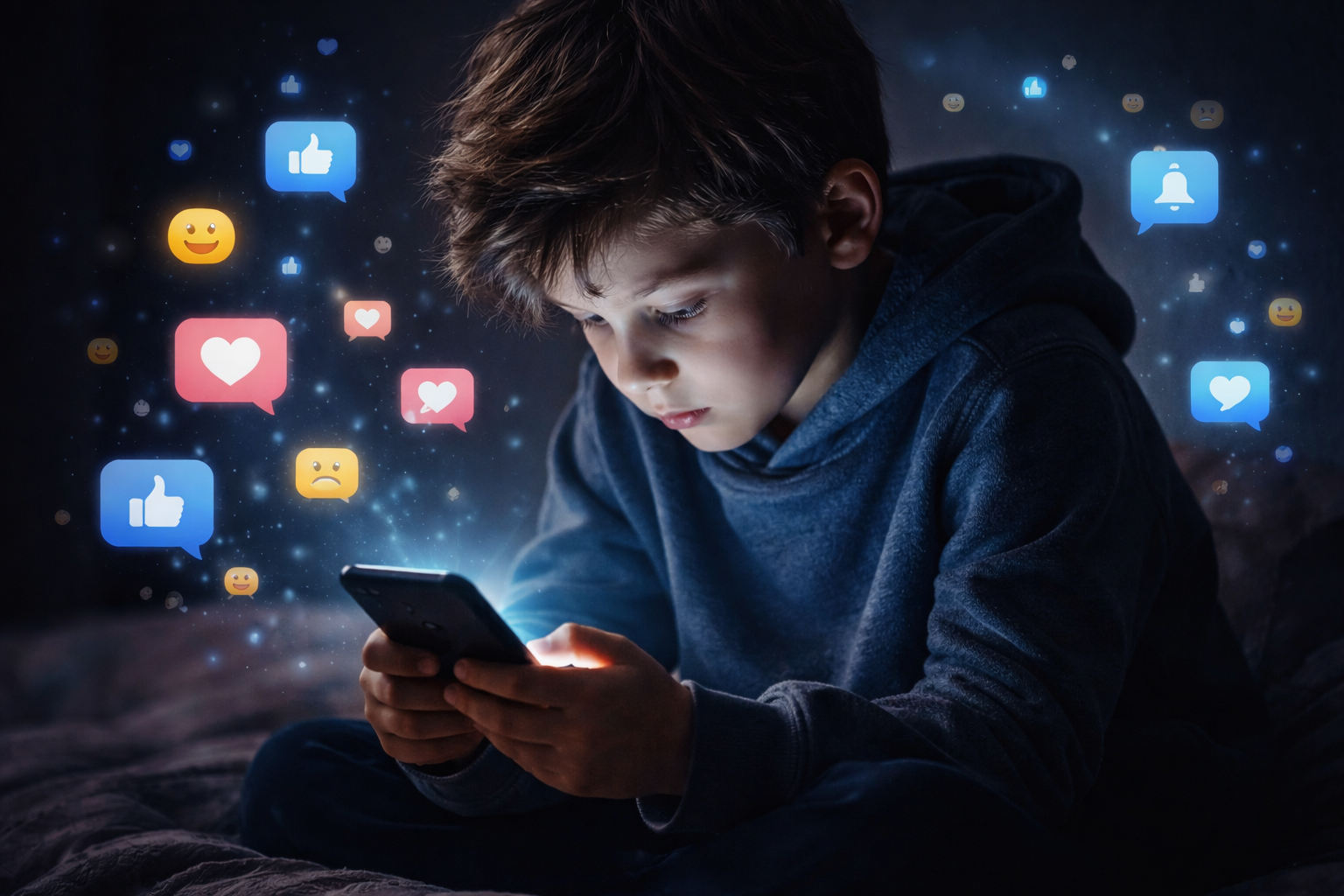
In today’s digital world , social media has become a part of everyday life, especially for children. Platforms like Instagram , youtube and many short-video apps are designed in a way that keeps people scrolling and watching for long periods of time. For many kids, what starts as simple entertainment can slowly turn into a habit and sometimes even social media addiction. This can affect their mental health , behaviour and overall development.
Because of this, many parents and teachers are becoming increasingly concerned. They worry that too much screen time may influence how children think , learn and interact with the world around them. Keeping a healthy balance between online activities and real-life experiences has now become more important than ever.
Children are naturally curious and easily attracted to fun things. Social media apps use bright colors, short videos and features like likes and comments to catch their attention. Platforms like Instagram and YouTube are designed in a way that keeps people watching and scrolling for a long time.
When children get likes or nice comments on their posts, it makes them feel happy and excited. Because of this feeling , they may start checking their phones again and again to see if they got more likes or views. Slowly, this habit can turn into an addiction.
Many children also use social media when they feel bored or stressed. Without noticing , they may spend many hours on their phones which increases their screen time and can affect their focus , mood and daily activities.
One of the biggest problems with social media addiction is how it affects a child’s mental health. When children spend a lot of time on platforms like Instagram or YouTube , they often start comparing their lives with what they see online.
Many posts on social media show perfect photos, beauty standards and luxurious lifestyles. When children see this again and again , they may start feeling that their own life or appearance is not good enough. This can lower their confidence and make them feel sad , anxious or stressed.
Spending too much time on social media may also affect their behaviour. They might get angry easily , feel restless and find it difficult to concentrate on studies or other daily activities. Over time , this can affect their emotional health and overall growth.
When children spend long hours scrolling on social media apps like Instagram or watching videos on YouTube , it can start affecting their studies. They may lose focus on schoolwork , delay or skip homework and find it hard to concentrate in class.
Spending too much time on the phone can also make learning more difficult. Over time, it may reduce their ability to remember things and understand lessons properly.
Another problem is late -night mobile use.Many children stay up late watching videos or scrolling through posts, which affects their sleep. When they don’t get enough rest , they feel tired the next day and may struggle to perform well at school.
Social media addiction does not only affect the mind but also harms physical health. Long hours on mobile screens can cause eye strain, headaches, and poor posture. Lack of physical activity increases the risk of obesity and weak immunity in children.
Reduced outdoor playtime also impacts child development and overall fitness.
Children addicted to social media often prefer online interaction over real-life communication. This can lead to poor social skills, isolation, and difficulty expressing emotions face to face. Over time, children may feel disconnected from family members and friends.
Healthy relationships are replaced by virtual connections, which are often shallow and temporary.
Parents play a very important role in helping children stay away from social media addiction. They can start by setting simple rules about how much time children should spend on their phones. Encouraging kids to play outside , take part in hobbies or spend time with family can also help reduce screen time.
Talking openly with children is also important. When parents explain both the good and bad sides of the internet, children learn how to use it more carefully and responsibly.
Parents should also try to set a good example. If children see their parents spending less time on their phones and more time with family , they are more likely to do the same. Small steps like these can help children develop better habits and maintain a healthy balance between online and offline life.
Social media is not completely bad, but using it too much can become a problem for children. Many kids spend a lot of time on apps like Instagram and YouTube, which can slowly turn into an unhealthy habit.
Parents, teachers, and society need to guide children on how to use social media in the right way. With proper limits and awareness, children can enjoy technology without harming their mental or physical health.