

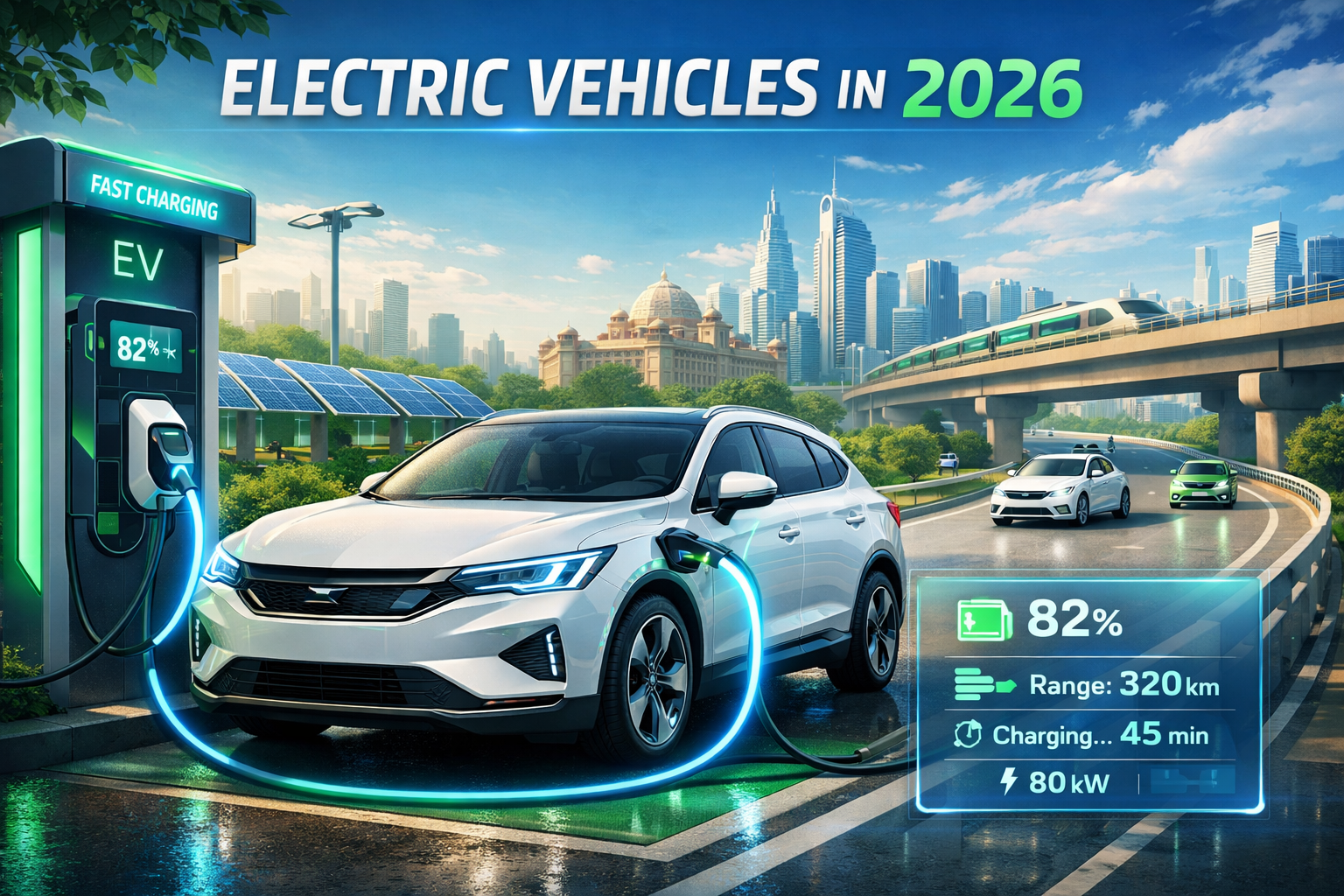
A couple of years ago, you could still make a reasonable case for waiting. Charging infrastructure was patchy. The good models were expensive. Range was a genuine concern outside major cities. Those arguments haven’t disappeared entirely but they’ve shrunk considerably. In 2026, the EV conversation in India isn’t really about whether the technology works anymore. It’s about whether you’ve done the numbers for your situation.
Global EV sales crossed 17 million in 2025 and are on track to push past 22 million this year. In India, EV penetration in the passenger vehicle segment has crossed 8% modest but up from under 2% just three years ago. Ola Electric, Tata, MG and Hyundai are all expanding their lineups. BYD has entered the market seriously. The options in 2026 are genuinely good.
EVs still cost more to buy than equivalent petrol cars. That gap has narrowed battery prices have dropped nearly 40% since 2022 but it exists. The Tata Nexon EV starts around ₹14–15 lakh. Its petrol counterpart is cheaper on day one. No point pretending otherwise.
Past that initial cost, the math changes fast. Electricity per kilometre runs about one-fifth the cost of petrol. No oil changes, no clutch, no exhaust repairs. Brake pads last longer because regenerative braking does most of the work. Under the FAME III scheme announced in late 2025, subsidies on select models have improved further. For someone driving 60–80 km a day, the break-even point against a petrol car is now closer to two to three years, not five.
The Tata Nexon EV now delivers around 465 km on a full charge in standard conditions. The Hyundai Ioniq 6 available in India since late 2025, clears 550 km. For daily commuting, range stopped being a practical problem for most buyers a while ago. Long highway trips are a different story still manageable but you need to plan.
Charging infrastructure has improved more than most people realise. Tata Power alone operates over 10,000 public chargers across India as of early 2026. DC fast chargers on NH48, NH44 and other major corridors are spaced well enough that a Mumbai-Pune or Delhi-Jaipur run is no longer an adventure in logistics. Thirty minutes at a fast charger gets you 80% back. That’s a lunch stop, not a crisis.
Driving one is quieter than you expect. The acceleration is immediate no waiting for revs to build. After a few weeks, going back to a petrol car feels slightly unpleasant in comparison. These aren’t marketing points but they’re just what the experience is like.
The real remaining friction is home charging access. If you live in an apartment without a dedicated parking spot and charging point, you’re relying entirely on public infrastructure. In tier-1 cities that’s workable. In smaller towns, less so. It’s worth sorting out before buying, not after.
If you own or rent a place where you can charge overnight, drive mostly in or between major cities and plan to keep the car for at least three years yes. The finances work, the cars are good and the charging network is no longer the liability it was. If you’re in a tier-3 city with no home charging and regularly do long rural drives, wait another year or two.
India’s EV target is 30% penetration by 2030. That’s four years away. The infrastructure investment, the model launches and the subsidy structure are all pointed in the same direction. At some point the question stops being “should I switch” and becomes “why haven’t I yet.”